«Wi-Fi works in the morning but drops at night.» The reason is almost always the same: the network was designed for coverage, not capacity.
Coverage vs capacity
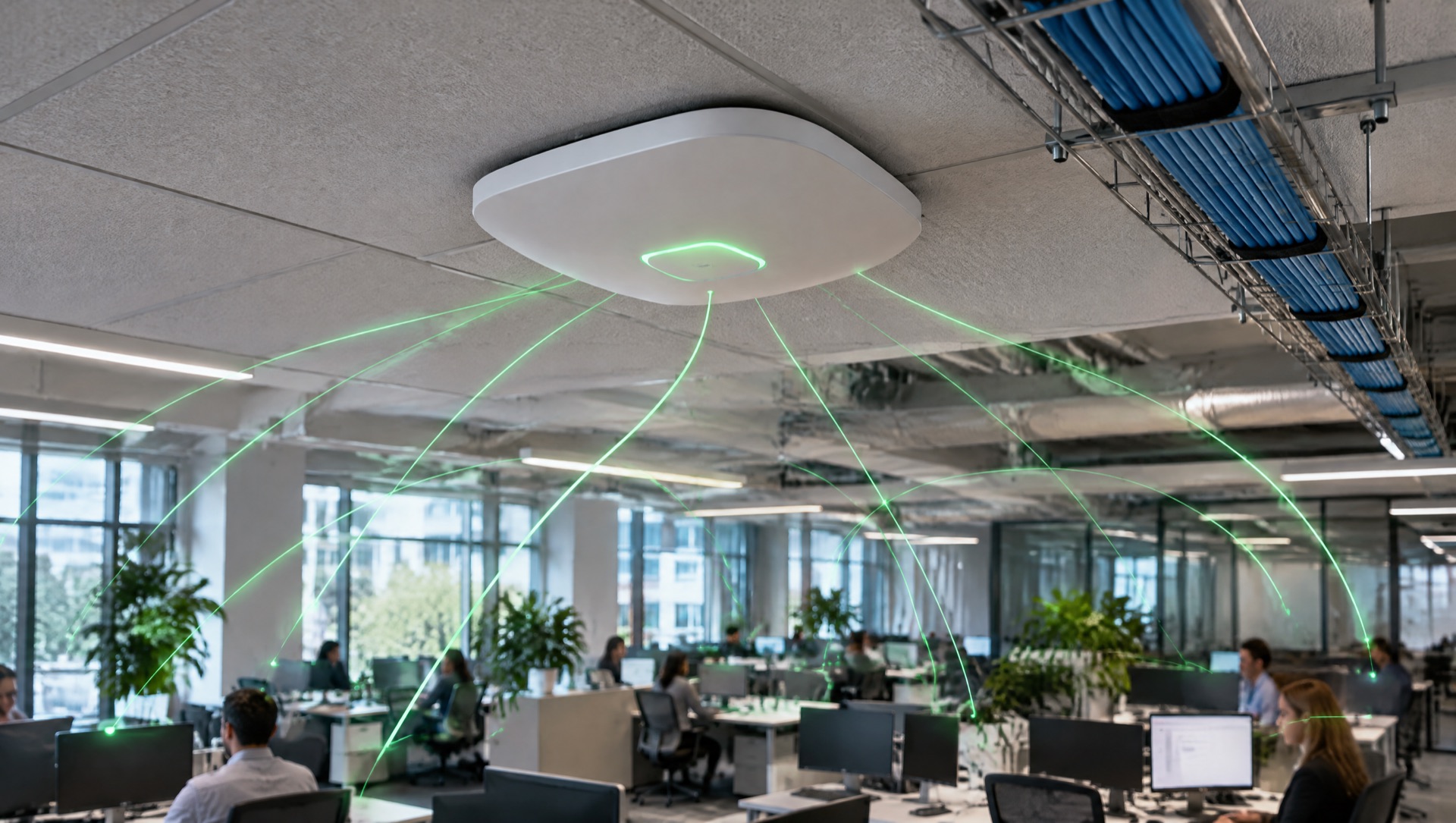
One powerful router may reach the whole venue, but every device shares the same airtime. High-density design uses more access points at lower power, each serving a manageable group.
Good design includes
- A site survey before installation.
- Prioritizing 5 GHz and, with compatible gear, 6 GHz (Wi-Fi 6E/7).
- 20 or 40 MHz channels in dense areas.
- PoE ceiling access points, discreetly mounted.
- Cloud or controller management and monitoring.
Security
Guest Wi-Fi must never share a segment with POS, cameras or admin. We use VLANs, client isolation, captive portals and WPA3 where supported.
Common mistakes
- Consumer repeaters that halve throughput.
- Access points inside metal ceilings or behind displays.
- Every AP on the same channel at full power.
- Insufficient (or no backup) internet uplink.
- No per-user bandwidth limits for guests.
We design high-density Wi-Fi networks across Baja California.
Have a project in Tijuana or Baja California? An AVS engineer can review your drawings and propose the right solution. Request a quote or email ventas@avsintegracion.com.