Music affects how long guests stay, service pace and brand perception. Yet many restaurants have speakers that blast one table and barely reach the next. The difference is electro-acoustic design.
Step 1: split the space into zones
A multi-zone system gives dining room, bar, terrace, private rooms and restrooms independent sources and volumes.
Step 2: even coverage before power
More speakers at lower volume beat a few loud ones. A coverage simulation defines quantity, angle and spacing based on ceiling height. For background music we typically work around 65–75 dB(A), tuned to the concept.
Step 3: 70/100 V or low impedance
- Constant voltage (70/100 V): ideal for many distributed speakers over long runs.
- Low impedance (4–8 Ω): higher fidelity for bars, dance areas and subwoofers.
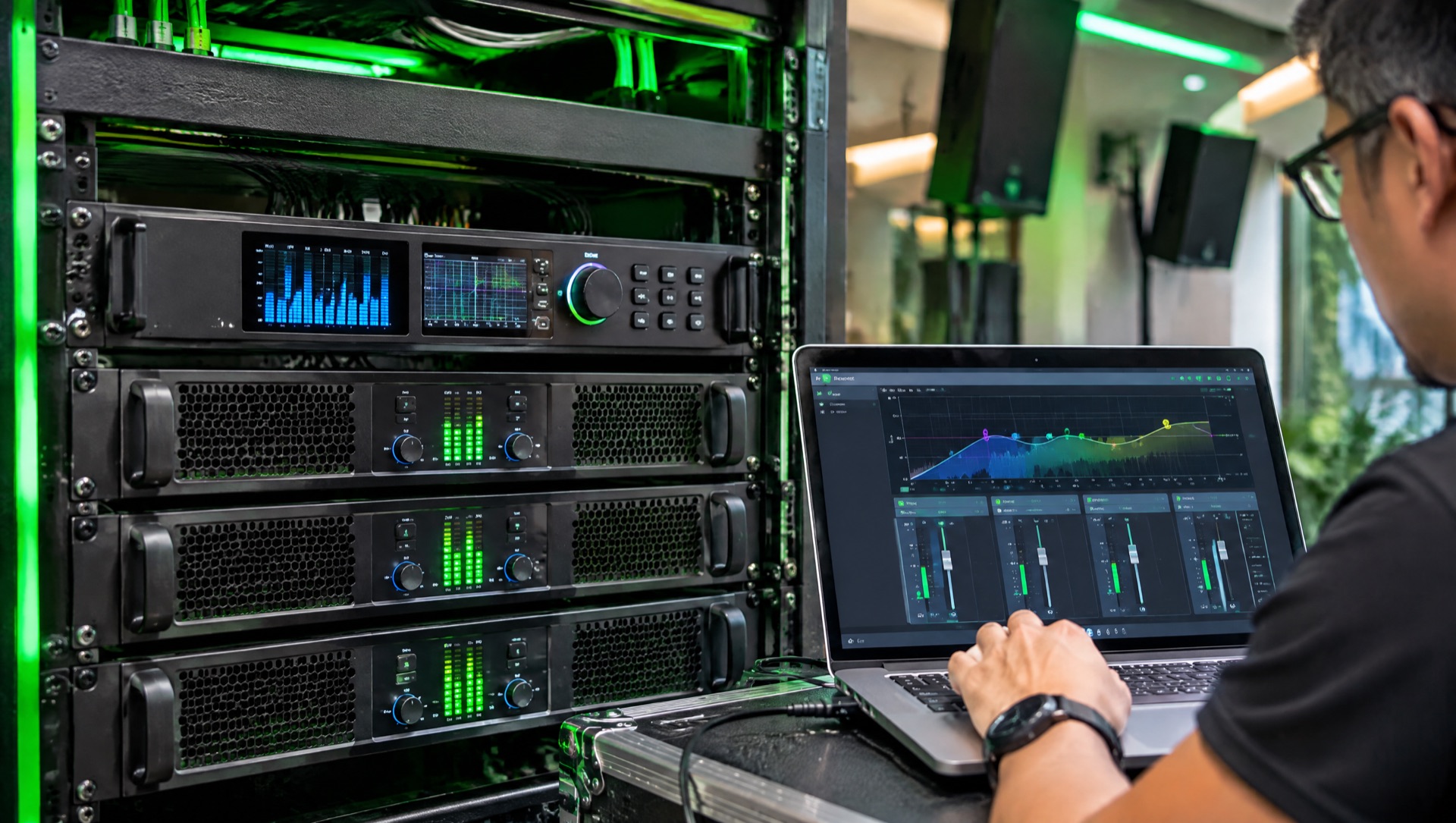
Step 4: the DSP
- Per-zone equalization to compensate room acoustics.
- Delays to align distant speakers.
- Limiters to protect equipment and avoid complaints.
- Automated scenes and ducking for announcements.
Step 5: room acoustics
Hard materials (exposed concrete, glass, marble) increase reverberation. When involved early, we suggest absorptive finishes or decorative panels that improve intelligibility.
Step 6: simple control
Wall panels per zone or app control, with locked maximum levels so nobody «turns it all up» at peak hour.
Learn more about our professional & commercial audio service.