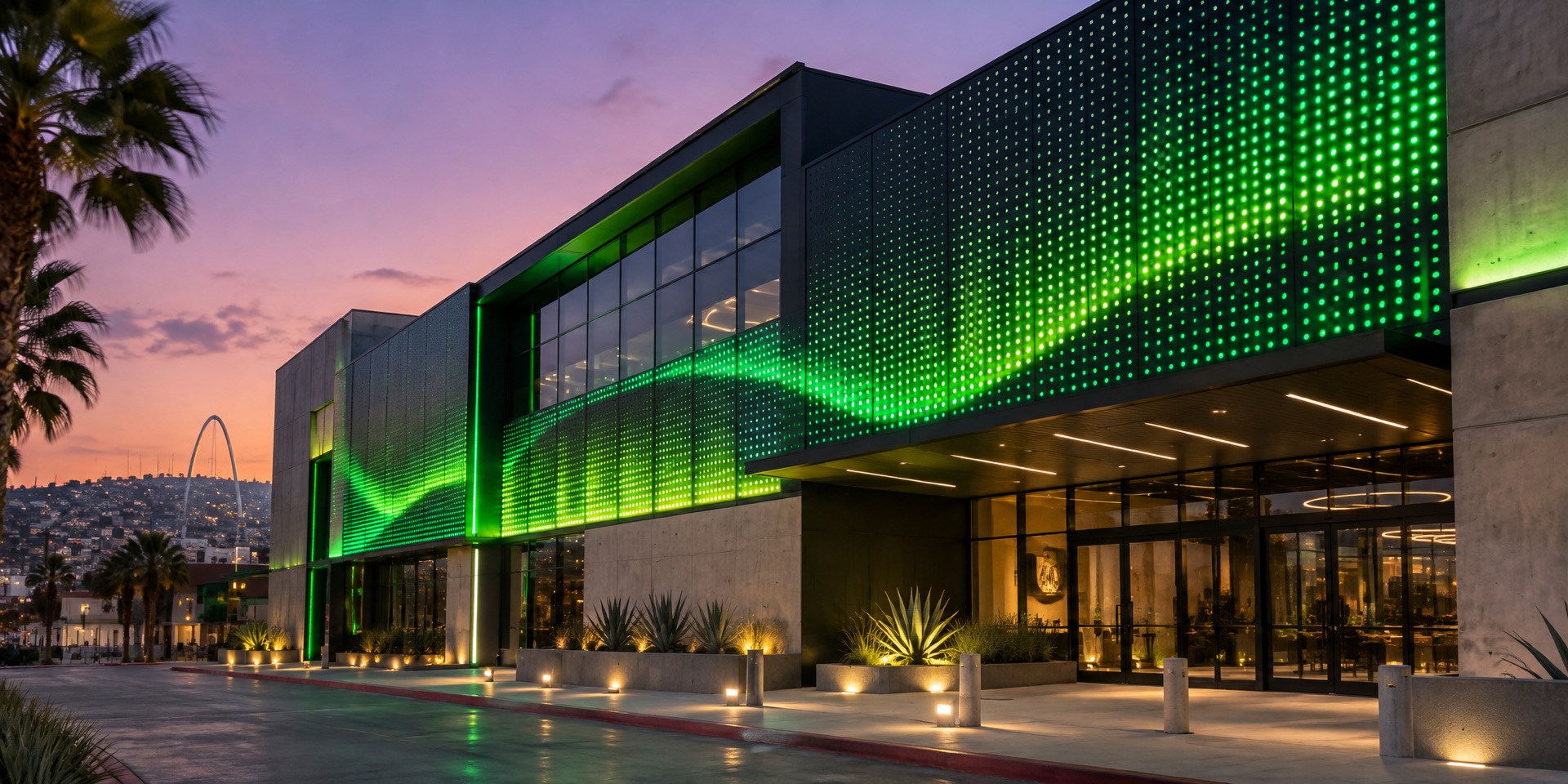
An architecturally lit façade becomes a city landmark and a branding tool. There are two main control families: DMX and LED Pixel (usually SPI). Both can coexist in one project.
DMX512
The standard lighting control protocol. Each universe carries 512 channels; an RGB fixture uses 3, RGBW uses 4. Large projects carry universes over the network via Art-Net or sACN.
LED Pixel SPI
In addressable pixel strips each point has its own chip and can show a different color, enabling low-resolution video effects across architecture: sweeps, waves and music-synced patterns.
| Criteria | DMX | LED Pixel SPI |
|---|---|---|
| Control | Per fixture or segment | Per individual pixel |
| Effects | Color washes, scenes | Animations, video-like content |
| Best for | Elegant façades, hotels | Dynamic façades, retail, entertainment |
Design keys
- Light should reveal the building’s form, not compete with it.
- Choose good CRI and tunable white for white scenes.
- Use IP65/IP67, corrosion-resistant fixtures in Baja California’s coastal climate.
- Plan power injection on long pixel runs.
- Program calendars for holidays, seasons and energy-saving hours.
See our architectural lighting & control service.
Have a project in Tijuana or Baja California? An AVS engineer can review your drawings and propose the right solution. Request a quote or email ventas@avsintegracion.com.